

| |
|  |
|
 |
 |  |
|
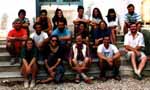
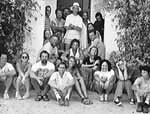
Dr. Hafed Walda ( hafed.walda@kcl.ac.uk ) Classics Department, Kings College London After gaining his batchelor's degree in his native Libya, Hafed came to the Institute of Archaeology in London where he obtained his doctorate in Roman Art and Archaeology. He has gained teaching and museum experience, and practical experience of excavations, using the latest methods, in rescue archaeology in London, and academically orientated excavations in classical Mediterranean sites, including Sparta, where he acted as Archaeology Co-ordinator. At the British Museum, on a two year appointment as Curator he co-ordinated the setting up of the new Roman Gallery (Room 70) which has become a focal point for many visitors to the Museum. During this period he used his experience to advise the Libyan Department of Antiquities in the creation of the new museum at Lepcis Magna.At King's College London as well as teaching courses in Roman Art, Roman Architecture and Introduction to Archaeology, he has played a key role in the development of the Daidalos database of the works of ancient Greek sculptors, a project that has attracted international interest.For the last four years he has directed the excavation at Lepcis Magna. His primary research objective is to find out the reasons for the decline of the city in the Late Roman period. In connection with the excavation at Lepcis Magna, he has developed a software package for archaeological site recording.At present Hafed is developing methods to prepare 3-D models for archaeological finds, especially pottery, and exploring the use of Quick Time VR for virtual reality walkthroughs in the museum context. |
|  |
|
Dr. Keith Wilkinson ( Kwilkinson@wkac.ac.uk ) Archaeology Department, King Alfred's College, Winchester Keith studied at the Institute of Archaeology, University College London. He completed a BSc programme in 1989, specialising in environmental archaeology, followed by Ph.D study between 1989-1992. His thesis was concerned with modelling and interpreting erosive sediment sequences of the South Downs in Sussex, England to see what effect past agricultural activity had on the environment. Keith's Ph.D was awarded in 1993 and is due to be published in 1997. On completion of his doctoral research Keith worked as a freelance environmental archaeologist, working particularly in the fields of geoarchaeology and molluscan analysis. In 1994 he joined Cotswold Archaeological Trust as Senior Environmental Officer, carrying out environmental archaeological work on their projects, and also running a geoarchaeological consultancy. As well as working on these "rescue" projects Keith has also played an active role in several university excavations, and is carrying out geoarchaeological research on sites in Spain, Greece and Turkmenistan as well as the United Kingdom. In 1997 he moved to King Alfred's College, Winchester, where he is Lecturer in Environmental Archaeology. Keith's research interests mainly lie in geoarchaeology and the use of GIS / CAD as a 3D site and deposit recording tool. |
|  |
|
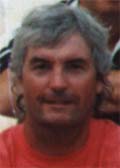
George Wilson |
|  |
|
Richard Williams |
|  |
|
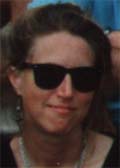
Isabella Welsby Sjöström Archaeological consultant. Isabella graduated in Ancient and Medieval History and Archaeology from Liverpool University in 1983 and gained an Mlitt from Newcastle University in 1989. She has participated in surveys and excavations in the UK, Italy, Greece, Turkey, Sudan and Libya, both at el Merj and at Lepcis Magna. She works as a pottery specialist on the UK based Sudan Archaeological Research Society's projects in northern Sudan (directed by Dr Derek Welsby of the British Museum) as well as at Lepcis. Her postgraduate research concerned the transitional period between Rome and the Middle Ages in Tripolitania. Isabella can be contacted at 36 Beechdale RoadLondon SW2 2BEUK |
|  |
|
Jane Sidell ( jane@molas.demon.co.uk ) Environmental Section, Museum of London Archaeology Service Jane Sidell trained at the Institute of Archaeology, University College London, completing her BA in 1990 and MSc in 1991. As an undergraduate she specialised in Roman archaeology developing interests in Roman settlement of all parts of the Roman empire. Her masters study was in zooarchaeology where she developed expertise in vertebrate bone identification and interpretation. However, her dissertation was a pioneering study developing criteria for identifying eggshell recovered from archaeological sites using both optical and scanning electron microscopy. This study has now been published by the University of Pennsylvania. On leaving the Institute of Archaeology Jane pursued a career as a freelance zooarchaeologist, working on material from Britain, mainland Europe and the Middle East and contributing to a number of research papers. In 1992 she joined the Environmental Section, Museum of London Archaeology Service as a zooarchaeologist and has continued there ever since. She is now manager of the Environmental Section, and has broadened her interests from zooarchaeology and is currently examining alluvial stratigraphy associated with Holocene sea-level change in the Thames to determine what effect this had on past habitation. As well as working in Lepcis Magna Jane has recently been involved with projects in Greece, Poland, and Turkmenistan, as well as the United Kingdom. |
|  |
|
Dr. Paul Reynolds Specialist and consultant in Mediterranean ceramics (Classical and Post-Classical). Having studied for a B.A. in Archaeology at the Institute of Archaeology, University of London, Paul completed a Ph.D thesis there on the pottery and settlement of the Vinalopo Valley (Alicante, Spain), which covered the period AD 400-900 (i.e. late Roman, Visigothic and early Islamic). This thesis also examined in detail the regional production and distribution of fine wares, amphorae and coarse wares in the western Mediterranean over the period AD 400-700. The thesis is now published (British Archaeological Reports (BAR) International Series 588 and 604). Paul is currently working on the pottery from several projects:
Paul can be contacted at 9 Inwood CourtRochester SquareLondon NW1 9HS |
|  |
|
Adrian Miles ( adrianm@molas.demon.co.uk ) Senior Archaeologist, Museum of London Archaeology Service Adrian is a Senior Archaeologist with the Museum of London Archaeology Service. He joined the Museum in 1986 after graduating in Archaeological Science from the University of Bradford. He is responsible for supervising archaeological fieldwork and subsequent report production within London. He has been particularly involved with the excavation of post-medieval cemeteries and is currently working on the publication programmes for these sites. |
|  |
|
Carrie Matthews |
|  |
|
Robin Kilpatrick ( robin.kilpatrick@kcl.ac.uk ) Multimedia Development Lab, King's College London Computing Centre Robin came to computing from modern languages and linguistics. He trained as programmer and systems analyst, and took an early interest in hypertext, laserdisc and image databases. Robin's current work at King's College London focusses on multimedia, including scanning, digitizing video and audio, digital video recording and editing, and recordable CD-ROM production. He is pleased recently to have established the Multimedia Development Lab which he is now running. |
|  |
|
Stuart Laidlaw ( tcfasjl@ucl.ac.uk ) Photographic Department, Institute of Archaeology, London Born in Glasgow and educated at Glasgow University in the seventies. First worked in photography at Strathclyde University in the Applied Geology department and moved to London to work for the Institute of Archaeology in 1980. He has worked on excavations in Crete for many years as well as Northern Greece and at this site of Lepcis Magna in Libya. He is currently illustrating a handbook for the Getty museum. The Institute teaches basic archaeological photography courses to undergraduate students and a more extensive course to students taking the BSc in Archaeological Conservation. He also gives classes to students from Kings College and a summer photography workshop. External photographic workshops have been undertaken for The National Trust and the Science Museum and any other interested organizations could e-mail him for details of types of workshops available. |
|  |
|
Philip Kenrick |
|  |
|
Sophie Hay |
|  |
|
Michael Halliwell Photographic Department, Institute of Archaeology, London Born in Deal, Kent and after A-Levels took 3 years off and worked as a field archaeologist in and around Kent. He then moved to London in 1989 to do the degree course in Archaeological Conservation. Here he had his first formal training in photography and after graduating, managed to keep a hand in both careers, as joint Conservator / Photographer. He spent two seasons in ancient Sparta followed by six months in Beirut and two full seasons in Lepcis Magna in Libya. He is currently Photographic Assistant at the Institute of Archaeology, London. |
|  |
|
Georgina Garrett |
|  |
|
Philip Frickers |
|  |
|
Nigel Fradgley |
|  |
|
Franca Cole |
|  |
|
Ayse Çalik |
|  |
|
Ian Blair |
|  |
|
Kimberly Beaufils |
|  |
|
Sally Anne Ashton |